The Policy Construct, the Consequences, and the Case for System Reform
Scotland’s long‑term economic, health and social outcomes are shaped fundamentally by the transport system we choose to build.
The evidence presented in this report demonstrates that the early transport construct — the set of frameworks, assumptions and appraisal rules that have guided decision‑making for nearly two decades — is no longer aligned with the needs of a modern, fair and productive Scotland.
The analysis sets out the consequences with clarity. If the current construct remains unchanged, Scotland faces:
- £37–£50+ billion in combined economic, fiscal and health losses over 30 years
- 54,000–81,000 avoidable premature deaths
- 1.0–1.4 million avoidable illness episodes
- £30–£36 billion in avoidable NHS and productivity costs
- Deepening inequality in Aberdeen, Dundee and Edinburgh
- Higher long‑term public expenditure and lost private investment
These impacts are material, measurable and avoidable.
Our findings make clear that these outcomes arise not from individual decisions, but from a systemic construct that has normalised a bus‑only, car‑dependent model and treated tram, light rail and Very Light Rail as exceptional.
This Policy Construct undervalues health, regeneration and long‑term cost savings, and overvalues short‑term capital cost.
It has constrained the choices available to our cities and limited Scotland’s ability to deliver Net Zero, inclusive growth and healthier communities.
The programme of reform set out in Section C provides a clear and deliverable path forward. It includes:
- Updating appraisal and investment frameworks to reflect long‑term value
- Normalising VLR, light rail and tram as standard urban modes
- Embedding health, regeneration and inequality reduction in decision‑making
- Enabling private‑capital delivery models to reduce public cost and accelerate delivery
- Establishing transparent, institutional accountability for long‑term outcomes
These reforms are essential if Scotland is to meet its strategic objectives and ensure that transport investment delivers the greatest possible benefit for the public.
This report provides Cabinet with a robust evidence base and a clear case for action. The responsibility now is to ensure that our transport system is designed not for short‑term administrative convenience, but for long‑term national benefit, supporting healthier communities, stronger local economies and a fairer Scotland.
Bus Rapid Transit ? the Myth is Dead!
March 2026
In recent years, a chorus of so-called Siren voices has continued to promote the mistaken belief that Bus Rapid Transit (BRT) is a direct substitute for Light Rail in urban development and can do the same job as a tram or light rail, often overlooking both the unique benefits of rail-based systems and the pace of technological innovation.
These advocates persist with outdated arguments, disregarding advances such as Very Light Rail (VLR)—notably the proven hydrogen-powered trams capable of carrying 100 passengers—which now offer cleaner, more efficient alternatives to battery-electric solutions.
A recent study of a proposed Mass Rapid Transit BRT ( an oxymoron in itself) for Greater Milton Keynes March 2026, elsewhere on this site confirms this. https://applrguk.co.uk/admin/dashboard/Milton-Keynes-MRT-VLR
Furthermore, this narrative fails to acknowledge the UK government’s pivotal shift from the traditional ‘predict and provide’ approach to the more forward-looking ‘Vision, Validate and Placemaking’ strategy, introduced in February 2026, which recognises and seeks to correct the historic bias against Light Rail investment.
As we move into an era defined by sustainability, regeneration and community-centred planning, it is crucial to challenge these myths and reframe the debate around transport infrastructure.
The key lessons emerging from the UK’s experience with Bus Rapid Transit systems, and to explain why cities seeking long‑term, generational change should now look beyond bus‑based solutions.
This is particularly relevant as we consider the future of our own transport corridors and the scale of transformation required to support healthier communities, stronger local economies and a more resilient urban environment.
Over the past two decades, several UK cities have invested in BRT or guided‑bus systems, including Belfast, Cambridge, Greater Manchester and Glasgow.
These schemes have delivered improvements to bus travel, especially in terms of reliability, branding and journey times. However, the evidence is consistent: while BRT can enhance a bus network, it does not create the kind of permanent, city‑shaping infrastructure that supports regeneration, long‑term investment or sustained behavioral change.
One of the clearest lessons is that BRT lacks permanence. Because these systems operate on the road network, they can be altered, diluted or removed far more easily than fixed rail‑like systems. Developers and investors understand this, and as a result, BRT corridors rarely attract the kind of private‑sector confidence that accompanies tram, light rail or very light rail.
The experience in Glasgow with Fastlink, and in Cambridge with the guided busway, demonstrates how quickly a bus‑based system can lose momentum or become the subject of debate about future conversion to rail. Without visible, irreversible infrastructure, regeneration simply does not follow at the scale cities hope for.
A second lesson concerns environmental and health outcomes. Modern buses are cleaner than their predecessors, but they still generate significant non‑exhaust emissions from tyres, brakes and road wear.
These particulates are now recognised as a major contributor to poor air quality, particularly in communities already facing health inequalities. BRT schemes across the UK have delivered only modest improvements in air quality, typically too small to shift long‑term health outcomes. Cities with entrenched deprivation and high illness burdens need a transport solution capable of delivering deeper, structural change.
A third lesson is the risk profile. Some BRT schemes have required substantial civil engineering, yet the benefits remain those of a bus system.
The Cambridge Busway has faced cost overruns, structural issues and ongoing maintenance challenges. This creates a situation where a city takes on rail‑scale risk without securing rail‑scale returns.
If a corridor requires major infrastructure investment, it is reasonable to expect that investment to deliver the permanence, regeneration impact and long‑term value associated with fixed rail‑like systems.
Finally, there is the question of public confidence. BRT is often presented as “tram‑like” or “metro‑like”, but public perception quickly settles on the reality that it remains a bus. While this does not diminish the value of improved bus services, it does limit the ability of BRT to inspire the kind of civic confidence and long‑term behavioral change that permanent systems achieve.
Cities that have invested in fixed rail‑like modes have seen those systems become part of their identity, shaping development and travel patterns for generations.
Taken together, these lessons point to a clear conclusion. For cities that need incremental improvements to their bus networks, BRT can be a useful tool. But for cities like ours, where the ambition is to deliver cleaner air, stronger regeneration, healthier communities and a transport spine that will still matter in fifty years, BRT is not the right strategic choice.
Generational change requires infrastructure that is permanent, legible and capable of anchoring long‑term investment.
A fixed, rail‑like system provides that foundation; a bus‑based system does not.
UK BRT Cities vs Very Light Rail designed before February 2026
City / Mode | Permanence | Regeneration | Air Quality | Non‑Exhaust Emissions | Reliability | Public Confidence | Long‑Term Value |
|---|---|---|---|---|---|---|---|
Glasgow (Fastlink BRT) | Low | Low | Small | High | Fragile | Low | Low |
Belfast (Glider BRT) | Medium | Low–Medium | Moderate | High | Medium | Medium | Medium |
Leigh Guided Busway | Medium | Medium | Moderate | High | Medium–High | Medium | Medium |
Cambridge Guided Busway | Medium | Medium | Moderate | High | Mixed | Mixed | Medium |
Liverpool (Proposed BRT) | Low–Medium | Low | Small | High | Medium | Medium | Low–Medium |
Milton Keynes (Proposed BRT) | Low–Medium | Low | Small | High | Medium | Medium | Low–Medium |
Leeds (Proposed BRT) | Low–Medium | Low | Small | High | Medium | Medium | Low–Medium |
Bradford (Proposed BRT) | Low–Medium | Low | Small | High | Medium | Medium | Low–Medium |
Derby (Proposed BRT) | Low–Medium | Low | Small | High | Medium | Medium | Low–Medium |
Very Light Rail (VLR) | High | High | Large | Low | High | High | High |
Metric comparison (post‑Feb 2026 Green Book, Vision & Validate, placemaking)
City / Mode | Permanence & Place‑making | Transformational Change | Carbon & Air Quality | Health & Inequalities | Regeneration & Land‑Value | Risk Profile | Value for £ (post‑2026) |
|---|---|---|---|---|---|---|---|
Glasgow – Fastlink BRT (built) | Low | Low | Small improvement | Small | Low | Medium–High (dilution, reversibility) | Low |
Belfast – Glider BRT | Medium | Low–Medium | Moderate | Modest | Low–Medium | Medium | Medium |
Leigh Guided Busway | Medium | Medium (on corridor) | Moderate | Modest | Medium (local) | Medium | Medium |
Cambridge Guided Busway | Medium | Medium | Moderate | Modest | Medium | High (defects, litigation) | Low–Medium |
Liverpool – proposed BRT | Low–Medium | Low | Small | Small | Low | Medium | Low–Medium |
Milton Keynes – proposed BRT | Low–Medium | Low | Small | Small | Low | Medium | Low–Medium |
Leeds – proposed BRT | Low–Medium | Low | Small | Small | Low | Medium | Low–Medium |
Bradford – proposed BRT | Low–Medium | Low | Small | Small | Low | Medium | Low–Medium |
Derby – proposed BRT | Low–Medium | Low | Small | Small | Low | Medium | Low–Medium |
Very Light Rail (VLR) | High | High | Large improvement | Large | High | Medium (infrastructure, but matched by benefits) | High |
How the picture changes under the new Green Book
Under the old, predict‑and‑provide mindset, BRT could look acceptable because it ticked boxes on journey time and basic value‑for‑money ratios.
Under the 2026 Green Book and Vision & Validate thinking, the scoring shifts:
- Permanence and place The updated guidance explicitly pushes place‑based, long‑term, transformational investment. BRT’s reversibility and weak place‑making drag its score down; VLR’s fixed, legible infrastructure scores strongly.
- Transformational change The new framework asks whether a scheme genuinely changes how a place works; not just how fast vehicles move. Existing and proposed BRT schemes remain incremental; VLR is designed as a city‑shaping spine.
- Carbon, air quality and health With stronger treatment of carbon, PM₂.₅ and wider health outcomes, small tailpipe gains from BRT are no longer enough. VLR’s zero‑emission operation and reduced non‑exhaust emissions push it clearly ahead.
- Regeneration and land‑value The updated Green Book and place‑based analysis give more weight to land‑value uplift and long‑term economic restructuring. BRT corridors have weak evidence here; fixed rail‑like systems do not.
- Value for £ Once you price in permanence, regeneration, health, carbon and risk, the apparent cheapness of BRT erodes. Rail‑like systems look more expensive up front but deliver far more social value over the appraisal horizon.
If Belfast Glider, Leigh, Cambridge, Fastlink and the proposed BRT schemes in Liverpool, Milton Keynes, Leeds, Bradford and Derby were appraised today under the post‑Feb 2026 Green Book, their value‑for‑money cases would weaken relative to a well‑designed VLR option.
They would still improve buses; they would not pass the test for transformational, place‑based, generational change.
Schemes like Belfast Glider, the Leigh Guided Busway, the Cambridge Guided Busway, Glasgow Fastlink and the proposed BRT systems in Liverpool, Milton Keynes, Leeds, Bradford, and Derby were assessed today under the post‑February 2026 Green Book, their value‑for‑money cases would look quite different from when they were first conceived.
All of these schemes were designed under a predict‑and‑provide mindset that prioritised vehicle movement and short‑term transport metrics. The updated Green Book now places far greater weight on place‑making, long‑term health outcomes, carbon reduction, regeneration, and the ability of infrastructure to deliver transformational change.
Under this new framework, bus‑based BRT systems would still be recognised for improving bus services, but their limitations would become far more visible. They lack permanence, they do not anchor regeneration, their air‑quality benefits are modest, and they do not deliver the deep behavioural change required to shift travel patterns at a city‑wide scale.
As a result, their overall value for money would weaken when judged against the broader social, environmental, and economic outcomes now required.
In contrast, a well‑designed Very Light Rail system aligns closely with the new Green Book principles. It provides fixed, legible infrastructure that supports long‑term investment, delivers stronger air‑quality and health benefits, reduces non‑exhaust emissions, and acts as a catalyst for regeneration.
It offers a level of permanence and place‑shaping power that bus‑based systems cannot match.
The conclusion is clear. While BRT can enhance bus networks, it does not meet the test for transformational, place‑based, generational change. Under today’s appraisal standards, VLR provides a stronger, more future‑proof foundation for cities seeking long‑term economic, social, and environmental value.
Is it too late to challenge proposed BRT schemes or extensions?
In almost every case, no — it is not too late. Transport schemes in the UK can be challenged, reshaped or replaced right up until the point where they receive statutory approval and funding is contractually committed. Even after that, there are still mechanisms to pause, review or redesign a scheme if the evidence base has shifted.
What has changed is the policy environment. Since the 2026 Green Book update and the shift to Vision & Validate, Place‑Based Outcomes, and Health & Carbon weighting, the bar for approving bus‑based BRT has become significantly higher.
That makes challenge easier, not harder to Challenge the strategic pre context case 2026
The legitimate, recognised routes, all grounded in UK transport governance, not activism or obstruction.
Under the post‑2026 Green Book, a scheme must show:
• transformational change • place‑making impact • long‑term regeneration value • carbon and health benefits
BRT struggles with all four. If a council fails to show these results, the scheme may be paused or revised.
This is the strongest and cleanest route.
By Challenging the economic case as the updated Green Book places far more weight on land‑value uplift • health outcomes • carbon reduction • long‑term social value
BRT’s value‑for‑money case weakens under this lens.
A VLR‑type system scores higher on every metric except short‑term capital cost.
If the economic case no longer stacks up, the scheme can be withdrawn or replaced.
By challenging the environmental case because BRT still produces • non‑exhaust particulates, road‑surface pollution, higher maintenance emissions, limited PM₂.₅ & pm 10s reduction
Under the new appraisal rules, these are no longer minor issues, they are material weaknesses.
A city can legitimately argue or charge that BRT does not meet its own climate or clean‑air commitments and is now under the Challenge the deliverability and risk case
Guided busways and BRT corridors now face scrutiny because of Cambridge Busway defects, high maintenance liabilities, reversibility and dilution risk, political fragility
If a scheme carries rail‑scale risk but only bus‑scale benefits, it can be re‑evaluated.
Challenge from the public‑engagement and consultation process can be made if consultation did not present alternatives fairly, relied on outdated appraisal methods, did not reflect the 2026 Green Book, did not consider VLR or fixed‑guideway options, then the consultation can be reopened or repeated regardless of costs spent so far,
This is common and entirely legitimate.
Challenging the funding case if a scheme was costed or justified under pre‑2026 rules, the funding body (DfT, CA, or Treasury) can require a refreshed business case, a new appraisal, a mode‑shift comparison, a place‑based assessment
This could lead to BRT being replaced by a more sustainable fixed‑guideway option
Thus, the next question is what happens if a city wants to switch from BRT to VLR?
This is more common than people think. Cities have switched modes at:
• Strategic Outline Case • Outline Business Case • even Full Business Case (rare, but possible)
If the evidence shows that BRT no longer meets the updated appraisal framework, a city can:
- Pause the BRT scheme
- Refresh the appraisal
- Rerun the options assessment
- Introduce VLR as the preferred option
- Submit a revised business case
This is entirely legitimate and has precedent.
The bottom line
It is not too late to challenge or replace proposed BRT schemes in:
• Liverpool • Milton Keynes • Leeds • Bradford • Derby • or any BRT extension elsewhere
The 2026 Green Book changes have made it easier, not harder, to argue that BRT no longer meets the standards for:
• transformational change • regeneration • health impact • carbon reduction • long‑term value for money
A fixed, rail‑like system such as VLR aligns far more closely with the new appraisal framework.
We urge a review of all BRT schemes to avoid negative long-term impacts and address climate change.
Hydrogen VLR, by contrast, is:
- fixed
- legible
- durable
- politically defensible
It signals long‑term commitment — something Glasgow has lacked in previous transport programmes.
Alignment with National Policy
Hydrogen VLR aligns with:
- the new Green Book
- Scotland’s Net Zero strategy
- Clyde Metro recommendations
- ISO 14001 environmental‑management principles
BRT does not.
Cabinet will want a mode that strengthens, not weakens, the Region’s case for national funding.
Political Conclusion
Glasgow has already tested BRT. It did not deliver the outcomes the Region needs. Scaling it up will not change that. The comparison table makes the choice clear: only Hydrogen VLR provides the permanence, regeneration impact, health benefits, and energy‑security value required for a generational transport investment.
Choosing H‑VLR positions Glasgow City Region as a leader in clean transport, green industry, and long‑term urban renewal — and avoids repeating the mistakes of Fastlink.
James Harkins CILT
Clean & Green Transport
UKTram Urges Holistic Approach to Transport Planning
Calls for city regions and local authorities to take a more holistic view to meet their future transport challenges are at the heart of our response to a landmark Government consultation.
Whilst we believe that light rail, very light rail and tram-train systems have a vital role to play in many parts of the country, all transport plans should be based on a thorough analysis of passenger travel patterns and a ‘mode agnostic’ approach to future transport planning.
This pragmatic view represents the central pillar of UKTram’s submission to the Department for Transport as it seeks views on a future Integrated National Transport Strategy.
We firmly believe that future transport planning should not be another political football. It should transcend party politics, requiring a long-term approach that doesn’t change every few years following local, mayoral and national elections.
Central to this will be fostering the view amongst politicians that public transport is an essential service rather than an afterthought or unnecessary additional cost. We have been clear in our view that spending on transport is an investment with a proven track record of driving economic growth.
Many cities and regions in the UK have already seen the benefits of investment in light rail as part of integrated transport networks, with trams becoming one of the most popular forms of public transport,
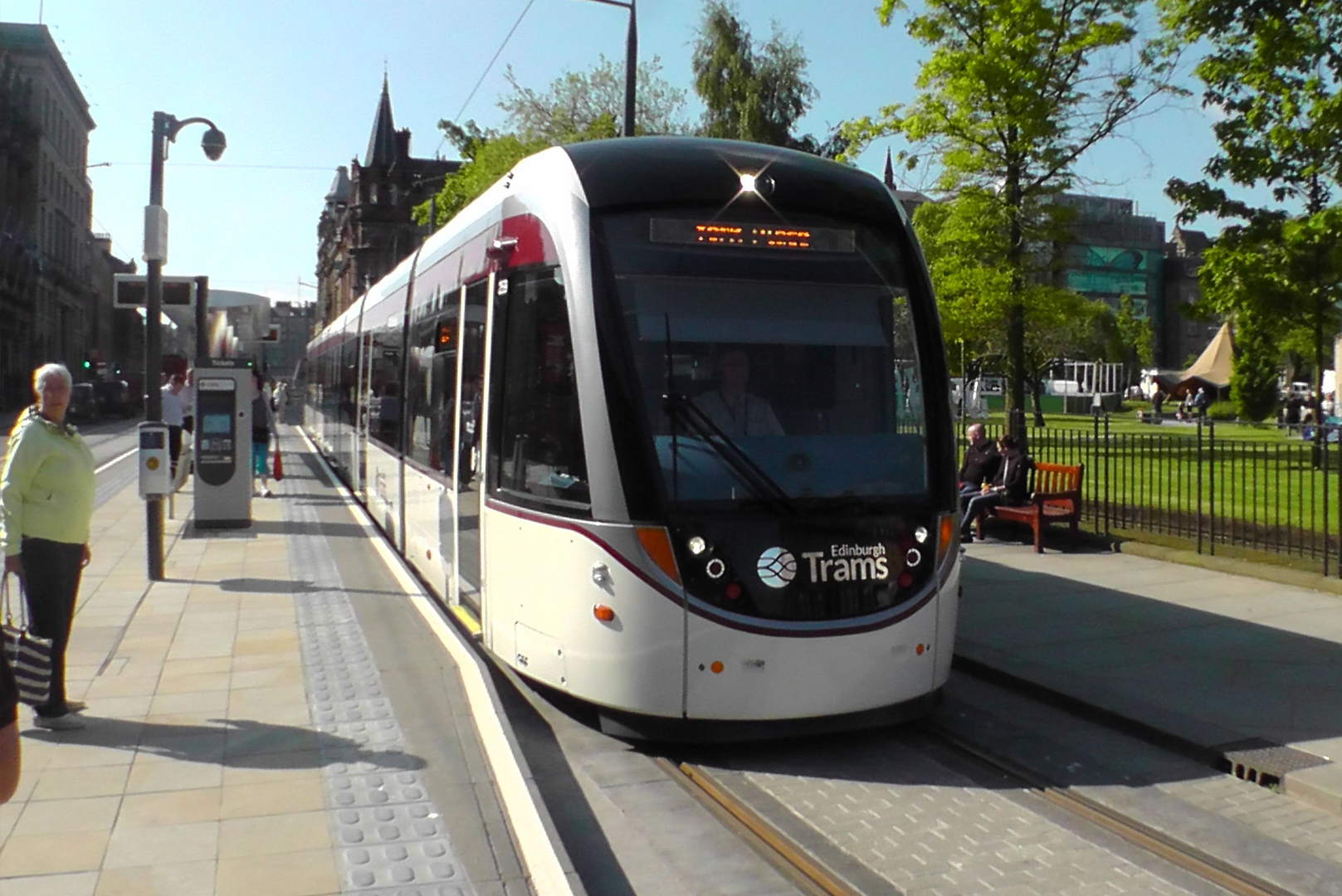
In areas including Greater Manchester, South Yorkshire and the West Midlands they are at the heart of extensive integrated transport networks, and in cities such as Nottingham and Edinburgh they have attracted significant inward investment – unlocking the potential of communities along the routes they serve.
At the same time, while improving connectivity, our existing light rail systems have made a major contribution to helping cities and regions improve air quality, reduce congestion and are contributing to the fight against climate change.
However, we have been clear in our submission that there is no ‘one size fits all’ solution to the transport challenges of the future and large-scale tramways and similar transit systems may not be suitable for smaller towns and cities.
Instead, we need to invest in new technologies to realise the benefits of very light rail and ultra-light rail. These systems can be built much quicker and at a fraction of the cost of more established tram systems and look set to become an increasingly attractive option for urban planners. Tram – Train systems also open up a range of other options to improve connectivity, particularly in more rural areas, and can free up capacity on the mainline rail network.
We have also urged the government to base future networks around fixed infrastructure, with more flexible modes such as buses feeding into them. This should be supported by comprehensive, cross-modal ticketing and travel information that makes it as easy as possible for passengers to switch between train, tram or bus to complete their journey.
Most importantly, all transport plans should be thoroughly reviewed by sector experts to ensure they are well-planned, viable, and will deliver the optimum solution required to meet the requirements of a towns, cities and regions that each have their own unique characteristics.
In short public transport needs to be Integrated for all modes to maximise their potential and we hope that the government will take this on board when finalising their future policy.
James Hammett
Managing Director, UKTram
Campaigning for Light Rail in all of its variants is a circular task similar to that of Sisyphus, a figure from Greek mythology. According to the myth, Sisyphus was condemned to push a boulder up a hill, only for it to roll back down every time he neared the top. But we will continue to try! |
|

Welsh Lib Dem Baroness Randerson,
A major stalwart supporter of the All Party parliamentary Light Rail Group, dies age 76,
Jenny Randerson represented Cardiff Central for 12 years
The Welsh Liberal Democrat politician Jenny Randerson has died at 76.
Baroness Randerson was elected in 1999 and represented Cardiff Central, beating Labour candidate Mark Drakeford for the seat.
She represented the party in the then Welsh Assembly - now the Senedd - from 1999 to 2011 and served in the Welsh Labour-Lib Dem administration of the 2000-2003 Welsh Assembly government.
Welsh Lib Dem leader Jane Dodds said her work as a minister "left an indelible mark on our politics and society".
Ms Dodds added she would be "deeply missed by her family, friends, colleagues, and the many individuals whose lives she touched through her public service".
"From free entry to Wales's national museums to the decision to build Wales Millennium Centre, Jenny dedicated her life to serving the people of Cardiff and Wales."
The former leader of the Welsh Liberal Democrats, Kirsty Williams told BBC Radio Wales that Baroness Randerson's influence was "significant, but, as always with Jenny, it was done in a very quiet and understated way".
She said: "Her contribution to both the Lib Dems in Wales, latterly the Liberal Democrats across the UK, but also to Welsh politics at the dawn of devolution is significant."
Williams, who met Baroness Randerson as a young activist in the Liberal Democrats in the 1990s, said she was struck by the number of younger people who had spoken of the mentorship she provided to them when she was a very busy politician herself.
Baroness Randerson began her career in education as a secondary school teacher and later as a lecturer at Coleg Glan Hafren in Cardiff.
She also served as a Cardiff councilor from 1983 to 2000, helping to grow the Welsh Liberal Democrat party's presence in the capital and leading the council's official opposition for four years.
She became the first female Liberal Democrat minister anywhere in the UK as Minister for Culture, Sport and the Welsh Language from 2000 to 2003 and was acting deputy first minister from July 2001 to June 2002.
The party said she was "instrumental in introducing a cultural strategy aimed at promoting the Welsh language".
After stepping down from the Assembly in 2011, she was appointed a life peer.
In the House of Lords, she continued her commitment to public service, notably serving as parliamentary undersecretary of state for Wales.
She was the first ever female Welsh Liberal Democrat to hold ministerial office at Westminster and the first Welsh Liberal to hold a UK ministerial post since Gwilym Lloyd-George in 1945.
Beyond politics, Baroness Randerson served as Chancellor of Cardiff University and was also a patron of various charities including Wales Council for Deaf People, the Cardiff and Vale Youth Wind Band and the African Mothers' Foundation.
Cardiff University's vice-chancellor Prof Wendy Larner said she was a "longstanding friend and advocate for the university and for the benefits of higher education" and that she would be "deeply missed".
Leader of the Liberal Democrat Group on Cardiff Council Rodney Berman called her a "terrific mentor" and said the party owed her a debt of gratitude.
Mr. Berman added that her "contribution to Welsh life and to politics over many decades has been nothing short of immense".
Courtesy of ; Oscar Edwards
BBC Wales News
Published
5 January 2025
2 August 2024.
Bruce and his spider have nothing on us!
We will be having our inaugural meeting as listed below and notified to the Whips office today.
It is for Parliamentarians only and at this meeting we will be electing Officers and members.
Please note, we have a full schedule planned to include a number of limited funded learning near and far.
We also have funding for a tram feasibility study, a generous dowry for Hydrogen Trams as a Service, details can be found in the Hydrogen section of your website.
This is a new Applrg and will be in a modern format which hopefully we will be able to build on the eighteen years + which has gone before altho' this website is also a historical record, and most events can be located here
We have several sponsors and three new team members since November 23 and have had 522601 website hits have been recorded in the last three years and it seems we are still an important source of tram knowledge.
Hoping to see those MPs who care about the benefits of trams as a catalyst to unlock all the good things that our nation needs in the coming Parliament
Date | Time/Venue | APPG Title |
Tue 3rd September 2024 | 1030h-1130h | All Party Parliamentary Light Rail Group |
Room R PCH | Inaugural Meeting | |
Members of HoC, HoL & Secretariat. | To encourage, promote and develop Light Rail, Trams, Very Light Rail, clean air, environs and its benefits as a mode of transport. |
November 2023.
Update
We thought we were back last year when Mr Andy Carter MP, former chair of the All Party Parliamentary Light Rail Group (Applrg) invited us back as Secretariat.
A bit of a poison chalice challenge really! however, we nearly had it up and running Febuary 23 with the assistance of Ms Christine Graham MP Lib/Dem but an influx of Lib/Dem work led to her withdrawal from taking on the registered member role as required by HoC Standards for APPGs to enable us to become an official APPG!
As there are 800 plus APPGs, the expected and anticipated reform of the APPGs, we are waiting to see how this will affect us on the ground especially in view of the swirl that is rising in anticipation of a General Election with 12-18 months.
In the meantime we will continue as a political group campaigning for the universal benefits in all our communities of steel on steel in the street especially in the fight for clean air.
24 July 2022
WE ARE BACK! --- Ooh No we are not - YET1
Last week Mr Andy Carter MP Chair of the All Party Parliamentary Light Rail Group, currently de-registered, appointed Light Rail UK Group to take over the Secretariat after the previous incumbents .
Our next step is to hold an AGM in September 2022 when Parliament reconvenes
Since we have been away as Secretariat, there has been significant advances in the Tram Industry especially in the emerging Very Light Rail sector, more detaisl can be found in Industry/BCIMO
We had started a series of pre-feasibility studies for our MP members constituencies which will now be restarted in line with the new technology and the greater awareness of Climate Change
We have a number imformational visits scheduled during the coming year which I will be writing individually to
If you, as our Industry supporters wish to be involved, dont hesitate to contact me or any member of my team which now numbers 6
More details will be available as they happen.
June 2022
This is a new, repurposed, and updated version of the former All Party Parliamentary Light Rail Group which Light Rail (UK) Ltd held and funded the Secretariat from its inauguration in 2005 until May 2021 and handed over the Secretariat to Downtown in Business, Mr Simon Danzcuk, former Labour MP for Rochdale to take the APPLRG on a different path from that successful model before.
James Harkins FCILT, MTPS has been retained as a Technical Advisor to the APPLRG.
We will as part of our policy be supportive of all Parliamentary Groups within the UK in our fight for the nation to share the wide range of benefits of this mode in all its variants.
The contents of the previous APPLRG (2006 - 2020) has been gifted to the archive section of the National Tramway Museum Society as a record of this time of tram and light rail history for the benefit of those who follow who will without doubt judge on our success or failure especially with regards to Climate Change.
Light Rail UK Ltd was established in 2005 as campaigning organisation to support sustainable Public Transport, predominately steel on steel street running technologies and fills the gap between Government and Industry funded organisations. A grouping consortium of experts who give “Pro Bono” freely of their time and expertise for the greater good and for those who follow.
Today, Light Rail UK Ltd operates as an independent, not-for-profit consultancy specialising in the delivery of green projects, supporting innovation and market development, focused on low cost Light Rail, Trams, VLR/ULR (3rd Generation Tramways) and associated energy infrastructure.
We highly value our independence as it allows us to provide impartial advice and helps us build trust with our colleagues, friends, and customers.
Being a not-for-profit, Light Rail UK Ltd isn’t driven by doing the work which pays the most or builds our order book, but by what is right for our clients and for the industry.
This is reflected in everything we do, from the work we do and the advice we give, even to the prices we charge. Our major concern is the green wash be pedalled by so called including Government experts who claim that rubber wheeled vehicles are zero emission, they are not as long as they are producing pm 10pm & 2.5pm and fine black carbon soot particulates
Finally, as consultants, our aim is to be trusted advisors with expert knowledge – the ‘go-to’ source of help and support for public and private sector organisations. We want to be people you can trust to help where and when it is most needed as our customers progress along their journey to a zero carbon future.
Light Rail UK Group will hold regular sessions in order to provide a holistic package of policy proposals that will drive forward best practice including supportive modes, leading to affordable light rail & tramways with resultant physical and economic regeneration, carbon reduction, improved air quality, congestion relief, affordable and sustainable transport. to the benefit of the UK and its' citizens.
Technical support is provided by James Harkins FCILT MTPS, Light Rail (UK) Ltd, Associates and Partners and various supporting organisations and individuals.
If you wish to sponsor a page, please contact jimh@jimmyharkins.com for further detail
Light Rail (UK) Ltd and partners provides low cost, high quality, affordable consultancy to Government and Local Authorities to enhance their growing awareness of the advantages of Light Rail and Tram systems especially for small cities, towns, and conurbations.
Our TramTracker 2 contains 80+ cities and towns that would be able to support and sustain a modern tram system (Password access only)